Not every trendy home upgrade adds value. Discover 5 popular design features in 2026 that may reduce buyer demand, shrink resale potential, and hurt long-term property value.
Every "trending" design looks tempting on a screen, but is it actually worth your equity? As we kick off 2026, we’re seeing a massive shift in buyer psychology. The features that were labeled "luxury" just two years ago are now being viewed as expensive headaches by modern buyers.
At Dhanbhumi, we’ve tracked a clear pattern: 2026 buyers are practical. They know interest rates are still a factor, and they want functional homes, not risky designs. If you want to stay ahead of the latest real estate investment trends 2026, you need to avoid these five "Trend Traps" that could tank your property value by next year.
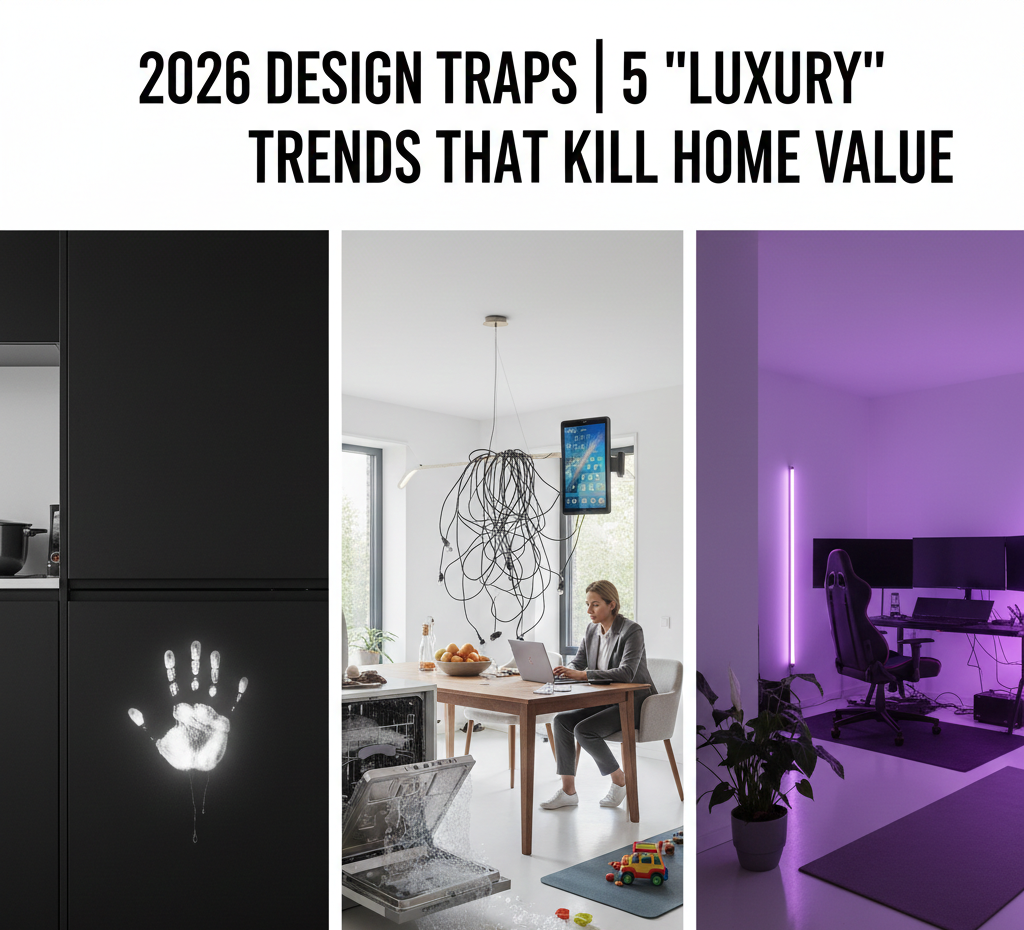
1. The "Full Open" Floor Plan is Officially Out
For years, the goal was to knock down every wall. In 2026, the "cafeteria vibe" is over.
- The Reality: After years of remote and hybrid work, people are tired of hearing the dishwasher while they’re on a Zoom call.
- The 2027 Killer: Buyers now demand distinct zones for peace and privacy. A house with zero walls feels like a public space, not a sanctuary.
- The Fix: Don’t knock out every wall. Instead, opt for "glass partitions" or "half-walls" to keep the light without the noise.
2. High-Maintenance "Tech Hubs"
Built-in tablets and "smart mirrors" seemed like the future in 2024, but technology ages faster than paint.
- The Reality: A tablet from two years ago already looks ancient today. Buyers don't want a home with a built-in system they can't figure out or a subscription they have to pay just to unlock the front door.
- The Fix: Keep your tech modular. This allows you to offer the practical luxury homes buyers actually want—where the tech can be upgraded without ripping out the drywall.
3. The "Ultra-Dark" Kitchen Nightmare
Matte black cabinets and deep navy islands are all over social media right now, but they are a cleaning disaster.
- The Reality: Dark matte surfaces show every fingerprint, water spot, and dust mote.
- The 2027 Killer: By next year, the "moody" trend will feel heavy and dated. Buyers are shifting back to warm, earthy neutrals that make a space feel airy and clean.
4. Converting Bedrooms into "Specialty Vaults"
Turning a spare bedroom into a permanent "Gaming Vault" or "Yoga Studio" with custom built-ins is a major risk.
- The Reality: You are shrinking your buyer pool. A family of four doesn't want a gaming vault; they want a 4th bedroom.
- The Fix: If it can’t be turned back into a bedroom in two hours, don’t do it.
5. "Fast-Fashion" DIY Finishes
Peel-and-stick tiles and faux-marble kits are peaking in early 2026 as "cheap luxury."
- The Reality: These materials yellow and peel within 12 months.
- The 2027 Killer: Buyers can spot a "DIY cover-up" instantly. It signals that you might have taken shortcuts on the home's hidden maintenance, too.
.png)

.png)

 90% Match