Discover how HOA mismanagement, rising maintenance costs, legal disputes, and poor governance are impacting condo values in 2026. Learn what buyers and investors should verify before purchasing apartments.
We’ve all heard it: "Delhi is Dil Waalo Ki." But if you’ve spent the last three weekends stuck in traffic looking at overpriced, cramped apartments, you might feel like Delhi is actually for the "exhausted."
The truth? The Delhi real estate market has shifted. It’s no longer about just buying a roof over your head; it’s about buying back your time. In 2026, the "perfect flat" isn't just an address—it’s a lifestyle pivot.
If you’re tired of the "sales pitches" and want the raw truth on how to find a home that actually feels like one, let’s dive in.
1. The "15-Minute City" Rule (Or: How to Stop Living in Traffic)
In 2026, the biggest luxury in Delhi isn't a marble floor; it’s a short commute. With the expansion of the Delhi Metro Phase IV and the high-speed corridors, the smart move is the "15-Minute Rule."
Your dream flat for sale in Delhi should have your gym, your favorite café, and your office link within a 15-minute radius.
- The Insider Secret: Don't just look at the map. Visit the area at 6:00 PM on a Tuesday. If the "last-mile connectivity" is a nightmare, that beautiful balcony won't make up for the stress.
2. RERA: Your Legal Bulletproof Vest
Let’s be real—buying property in India used to feel like a gamble. But in 2026, RERA compliance has become the buyer's best friend.
- If a builder avoids showing you the registration number, walk away. * A ready-to-move 3BHK in Delhi is currently the "Goldilocks" zone for families—it offers the security of "what you see is what you get" without the anxiety of construction delays.
3. The "Hidden Cost" Heartbreak
You see a price tag of ₹1.5 Cr and think, "I can do this!" Then come the "Add-ons." To keep your peace of mind, always ask about:
- The "Sun & View" Tax: Also known as Preferential Location Charges (PLC).
- The EV Reality: In 2026, if your parking spot doesn't have an EV charging point, your property's resale value will tank in five years.
- The GST Jump: Make sure your budget accounts for the 5-12% extra that goes to the government, not the house.
4. The "Zoom-Ready" Floor Plan
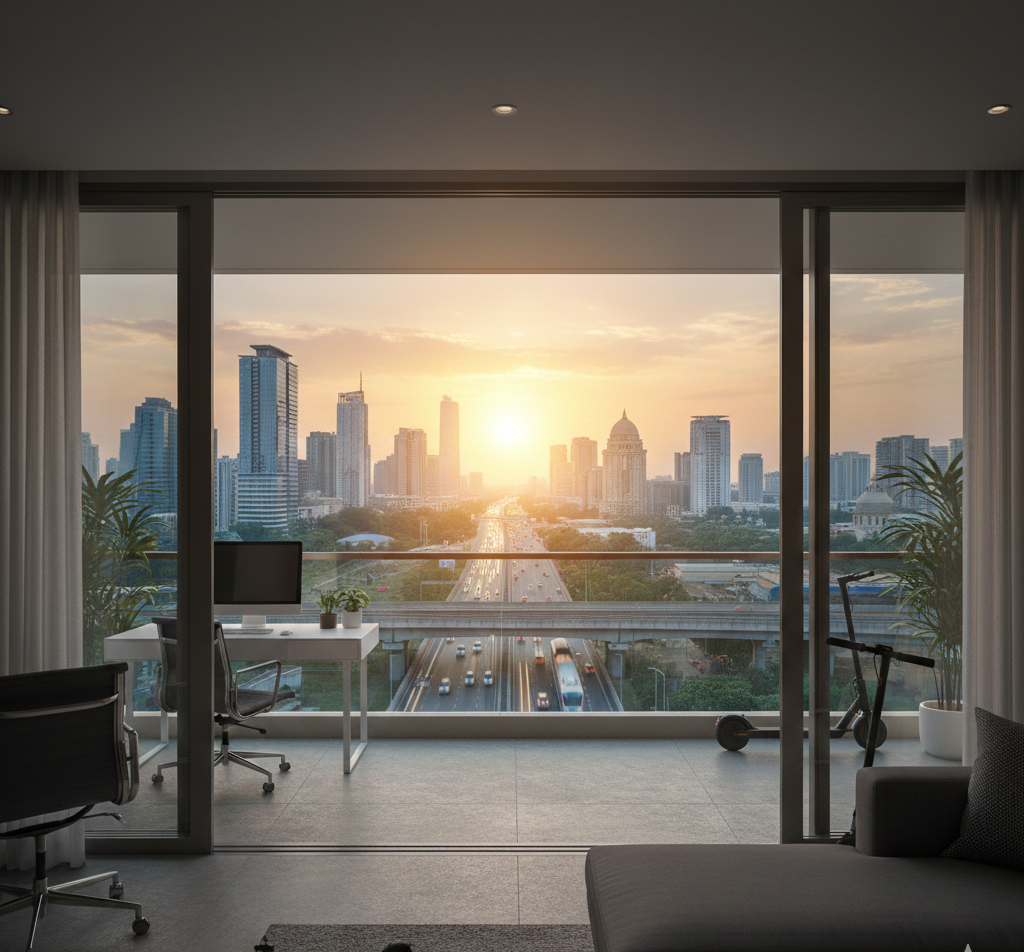
The world changed, and so did our homes. A "perfect" flat in 2026 must account for the Work-From-Home (WFH) factor.
- Is there a corner with natural light for your video calls?
- Is the building's Wi-Fi infrastructure fiber-ready?
- Pro Tip: Look for "Hybrid Rooms"—small spaces that can switch from a nursery to a home office. This flexibility is what defines modern residential property in Delhi.
The Verdict: Don't Settle for Bricks
Delhi is the heartbeat of India, and finding your place in it shouldn't feel like a battle. It’s about finding a sanctuary amidst the chaos. Whether you are chasing high capital appreciation or a quiet corner in a green-certified society, the goal is the same: A home that works for you, not the other way around.
At Dhanbhumi, we don’t just show you floor plans; we show you your future morning routine. From luxury penthouses to budget-friendly lifestyle hubs, we filter out the noise so you can find the signal.
Your dream home is waiting. Are you ready to stop searching and start living?
.png)

.png)

 90% Match