Learn how interest rate changes impact home prices in India, influencing affordability, buyer demand, rental markets, and long-term real estate growth.
Interest rates don’t directly set home prices — but they strongly influence what buyers can afford, and affordability is one of the biggest drivers of real estate demand. When interest rates change, they reshape buyer behavior, market sentiment, and investment strategies, all of which ultimately affect home prices.
Understanding this relationship is crucial for homebuyers, sellers, and investors navigating today’s evolving housing market. At Dhanbhumi, we closely track these trends to help buyers and investors make informed decisions.
The Relationship Between Interest Rates and Affordability
Interest rates primarily impact the monthly mortgage payment (EMI). Even a small change in rates can significantly affect how much a buyer can borrow.
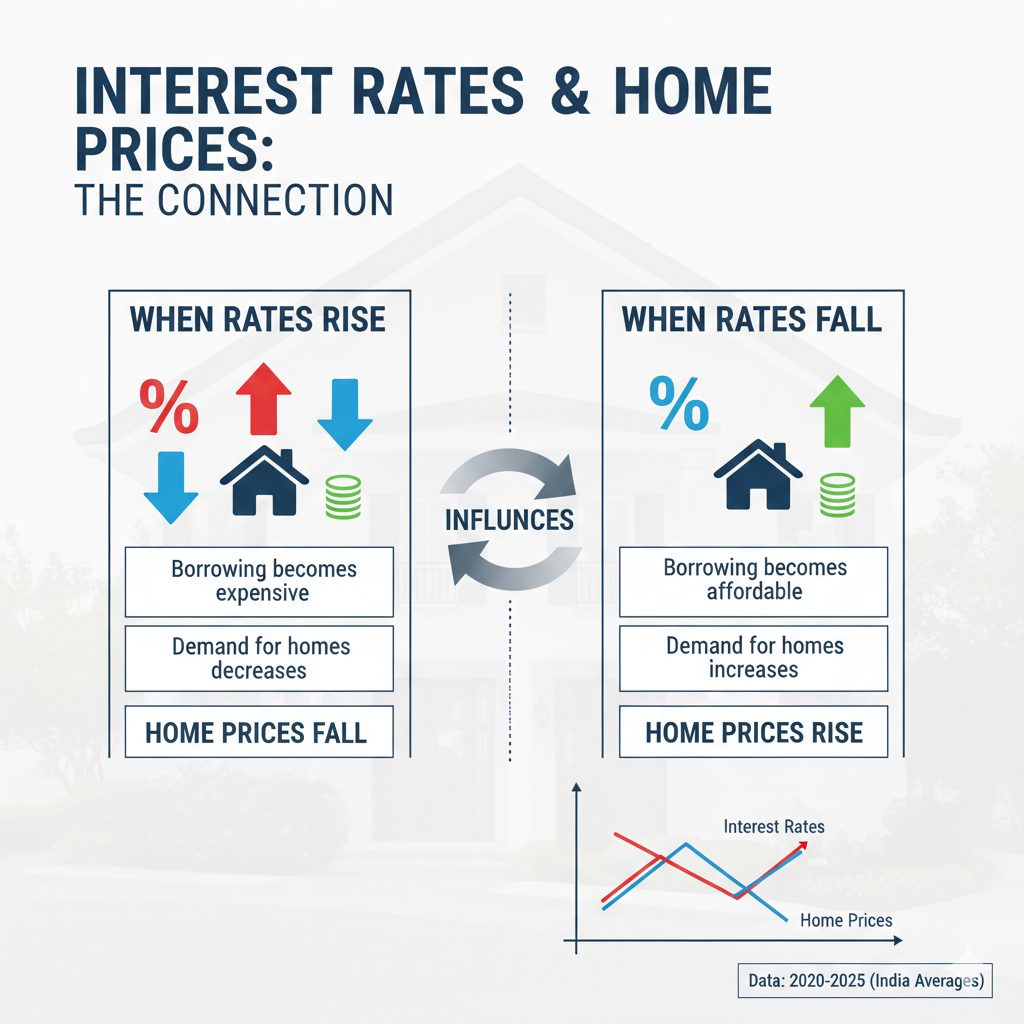
- When interest rates rise
Monthly EMIs increase, reducing purchasing power. Buyers either downgrade their expectations, delay purchases, or exit the market altogether. - When interest rates fall
EMIs become more affordable, allowing buyers to borrow more. This often increases demand and can push home prices higher.
In short, interest rates influence buyer affordability, which directly affects demand — and demand plays a key role in determining home prices.
Key Impacts of Rising Interest Rates on Home Prices
1. Reduced Buyer Affordability
A 1% increase in mortgage rates can add hundreds of dollars to a monthly payment. This reduces the number of qualified buyers and limits how much they can spend on a home.
As affordability declines:
- First-time buyers struggle to enter the market
- Buyers become more price-sensitive
- Loan approvals become stricter
2. Lower Buyer Demand
With higher borrowing costs:
- Fewer bidding wars occur
- Homes stay on the market longer
- Sellers are more likely to reduce prices
This slowdown in activity creates downward pressure on home prices, especially in markets that previously saw rapid growth.
3. Price Corrections in Certain Markets
Not all markets react the same way to higher interest rates.
- High-demand cities with limited inventory tend to remain resilient
- Overbuilt or declining regions often experience sharper price drops
At Dhanbhumi, we see that local supply-and-demand dynamics matter just as much as national interest rate trends.
The Role of Market Sentiment and Buyer Psychology
Real estate is not just numbers — emotion and perception play a major role.
- Buyers may hesitate, fearing they are purchasing at the market peak
- Sellers may delay listing homes, worried about not achieving desired prices
- Existing homeowners avoid selling to keep their low-rate mortgages
This hesitation reduces transaction volume and leads to price stagnation, even when homes don’t sharply decline in value.
Impact on Investors and Rental Markets
Higher interest rates also influence investor behavior:
- Some investors pause home purchases due to reduced profit margins
- Fewer homebuyers shift demand toward rentals
- Rental prices often increase as ownership becomes less affordable
As a result, rental markets strengthen, benefiting landlords and multifamily property owners , a trend frequently highlighted in Dhanbhumi’s real estate insights.
Limited Housing Supply Supports Home Prices
Despite rising rates, many regions continue to face a chronic housing shortage. New construction often lags behind population growth, which helps support home values.
This imbalance between supply and demand prevents major price crashes in most stable markets, even when borrowing costs rise.
Long-Term Effects of Interest Rate Changes on Real Estate
While rising interest rates create short-term challenges, they also help maintain long-term economic stability by preventing overheating in housing markets.
Key long-term factors shaping home prices include:
- Demographic demand: Millennials are entering their prime home-buying years
- Urbanization and job growth: Strong employment centers continue to attract buyers
- Income growth over time: Higher wages can gradually offset higher borrowing costs
Over the long run, these fundamentals support steady housing demand — a trend that platforms like Dhanbhumi closely monitor for buyers and investors alike.
Conclusion
Interest rates don’t directly dictate home prices, but they deeply influence affordability, demand, and market psychology. Rising rates may slow the market and lead to localized price corrections, while falling rates often fuel demand and price growth.
Understanding these dynamics is essential for making smart real estate decisions. Whether you’re buying, selling, or investing, staying informed through trusted platforms like Dhanbhumi can help you navigate the market with confidence.
.png)

.png)

 90% Match