Short Term Rentals V/S Long Term Leasing: Which Pays More?
425
Views
discover the pros and cons of short term and rentals and long term leasing.
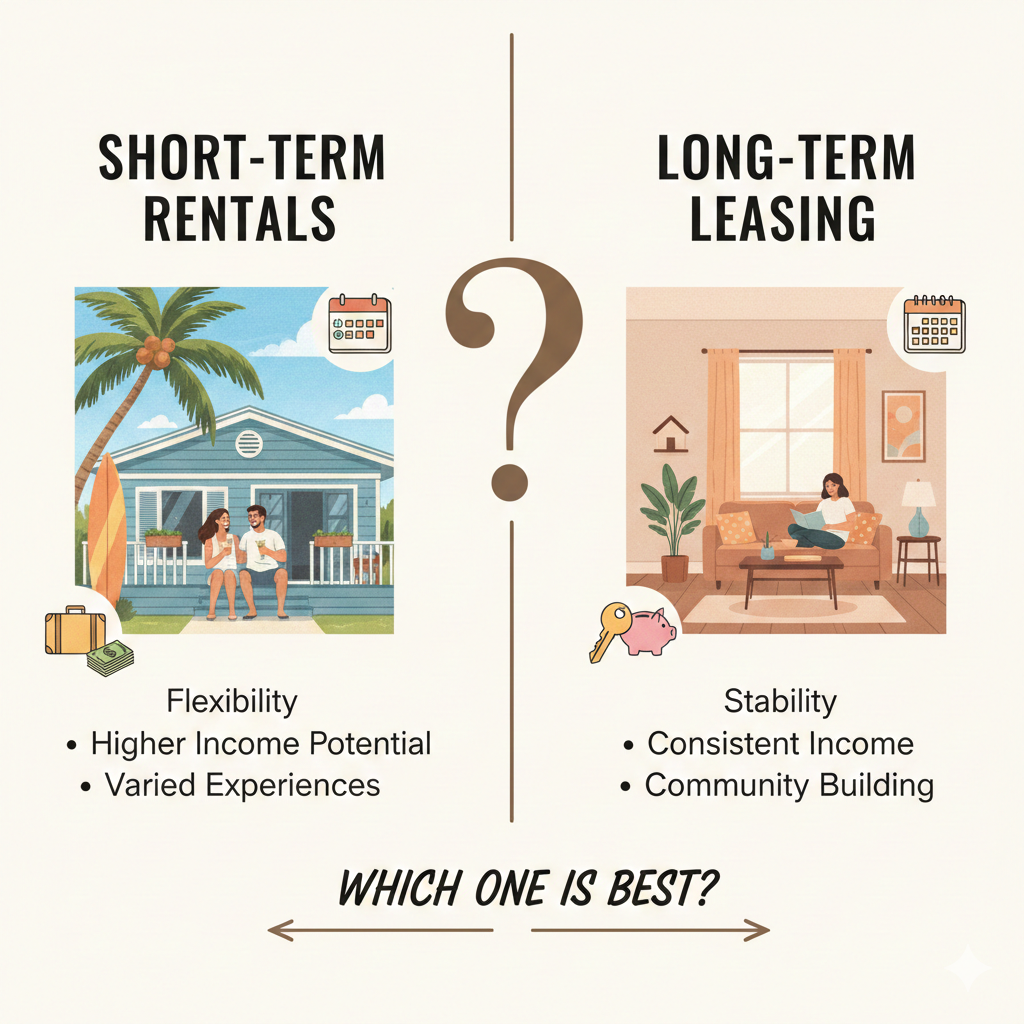
Both short-term rentals and long-term leasing have their own pros and cons. Which option is better depends on your location, personal goals, time, and financial condition.
What Do They Mean?
Short-term rentals: Renting a property for a few days or weeks (Example: Airbnb, hotel stays)
Long-term rentals: Renting a property for several months or years (Example: A family renting an apartment for one year)
Short-term rentals usually give higher income, but they require regular work. Long-term leasing offers stable income with less stress and management.
Let’s understand how they differ, their pros and cons, and who they are best for.
Short-Term Rentals
Advantages (Pros)
Higher income potential
Nightly pricing allows better earnings in tourist and busy areas
Prices can change according to seasons and demand
Good returns during peak travel periods
Disadvantages (Cons)
Income is not fixed; some days may have no bookings
Higher maintenance and operating costs (cleaning, staff, management, furniture, repairs)
Requires constant involvement and active management
Higher workload and responsibility
Best For:
Tourist locations, business hubs, and investors who can actively manage their property and aim for higher returns.
Long-Term Leasing
Advantages (Pros)
Predictable and stable monthly income
Less day-to-day involvement
Lower workload and management effort
Lower maintenance costs
Less wear and tear, as tenants treat the property like their home
Disadvantages (Cons)
Lower income compared to short-term rentals
Rent does not change much with seasons
Less flexibility
Rent increases are usually slow
Best For:
Type
Monthly Income
Short-term rental
$2,000 – $3,000 (varies)
Long-term lease
$1,200 – $1,500 (fixed)
Investors seeking steady income, hands-off management, areas with regular housing demand, and landlords who want peace of mind.
Conclusion
Short-term rentals are ideal for higher income but require more effort, while long-term leasing is perfect for stable income with minimal work.
There is no single best option—the right choice depends on your location, time availability, and investment goals.
.png)

.png)

 90% Match